

Cultural competency is more than knowing facts about other countries. It is the ability to engage respectfully, think critically, and adapt effectively when working with people from different backgrounds. In today’s global economy, this skill is no longer optional. Employers across industries value cultural awareness as much as technical knowledge or language proficiency. Graduates who lack it risk falling behind, regardless of their GPA or degree field.
There is a difference between learning about a culture and learning within it. Textbooks can describe rituals or norms. In-person experiences demand response, reflection, and flexibility. For example, navigating public transportation in a new city or attending a traditional family gathering forces students to confront their assumptions, manage discomfort, and expand their cultural lens.
In these moments, students are no longer observers. They are participants. The unfamiliar becomes personal, and the lessons stay with them long after a final exam would have been forgotten. Classroom settings often prioritize abstraction. Travel teaches through lived contrast, emotional reaction, and daily negotiation of meaning.
One of the most overlooked benefits of experiential travel is learning nonverbal and contextual cues. These include tone, gesture, timing, and interpersonal boundaries, none of which are easily captured in academic materials. A student who studies Japanese in class may know how to speak it, but a student who lives with a host family in Tokyo learns when silence means discomfort, when nodding signals listening rather than agreement, and how indirectness can be a sign of respect.
Such awareness cannot be replicated through simulated dialogue or cultural theory lectures. It comes only from immersion, observation, and repeated trial and error. These are the building blocks of real intercultural fluency.
Cultural competency is as much about emotional regulation and self-awareness as it is about knowledge. Travel challenges students to manage anxiety, frustration, and uncertainty while remaining open and curious. When a student misinterprets a local custom or makes an unintentional mistake, how they respond becomes a deeper lesson in humility, resilience, and empathy.
These skills are essential in both personal and professional contexts. In workplaces where teams are increasingly global or multicultural, employees who can stay calm under pressure, listen without judgment, and adjust their approach to different audiences are far more effective than those who merely understand the theory.
Experiential travel changes more than skill sets. It reshapes how students understand themselves in relation to others. By stepping outside familiar cultural frameworks, they see their own beliefs, behaviors, and assumptions through a different lens. This disruption, while occasionally uncomfortable, is what makes the experience transformative.
Unlike academic models that encourage students to argue a position or defend an interpretation, travel invites them to question what they thought they knew. This shift from certainty to inquiry fosters maturity, adaptability, and a willingness to keep learning beyond graduation.
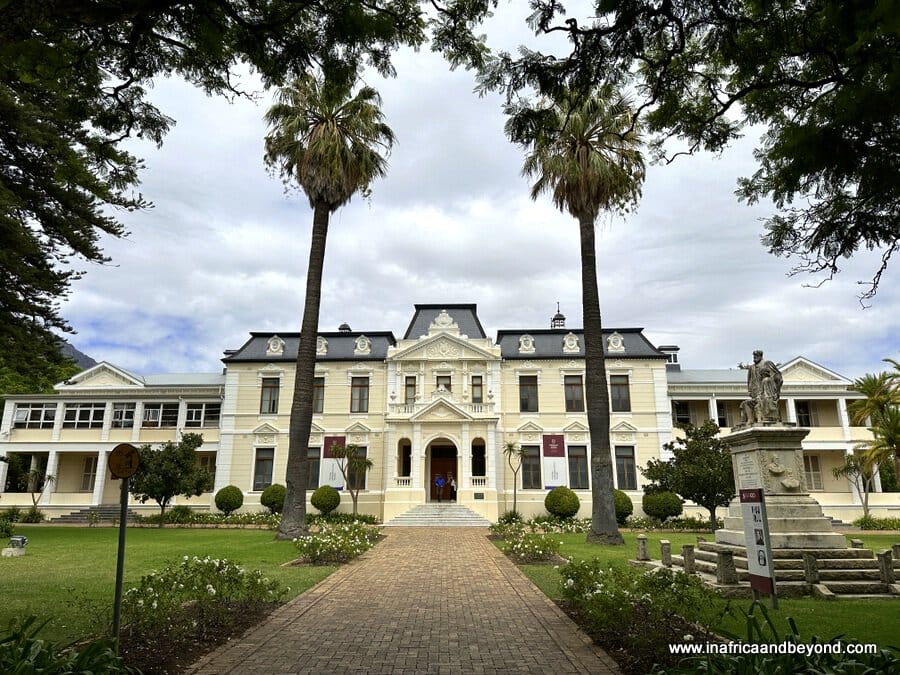
Stellenbosch University building
Despite good intentions, universities often fall short when it comes to cultivating genuine cultural awareness. Budget constraints, enrollment limits, and curriculum structures mean many students never interact meaningfully with peers from other cultures. Online classes and standardized lesson plans further reduce the chance for spontaneous, real-world engagement.
Even when institutions offer intercultural training or global awareness modules, these tend to be generalized or theoretical. They can raise awareness, but they rarely build the competencies needed to work across difference under pressure. That level of growth requires direct, sustained exposure, which only travel can provide.
Travel and academic success do not have to exist in separate worlds. When students return from immersive experiences, they bring new insights into their coursework. They participate differently in class discussions, connect theory to reality, and often show greater initiative in research and writing. Professors frequently report that students with global experience write more thoughtful essays, ask sharper questions, and demonstrate stronger communication skills.
The key is not to see travel as an escape from learning, but as an extension of it. With reflection and support, time abroad becomes an intellectual asset rather than a detour from academic goals.
Cultural competency cannot be memorized. It must be developed through challenge, reflection, and authentic human interaction. While universities can introduce the concept, only real-world exposure can turn it into lived practice. Travel forces students to step beyond comfort zones and into the complexities of cultural exchange. It teaches lessons no lecture can match.
Universities have made efforts to simulate cross-cultural learning, but classroom discussions and assigned readings only go so far. Even when students order custom PowerPoint slides or prepare presentations about other cultures, they rarely experience the realities of navigating cultural differences in real time. Travel, when done intentionally, bridges that gap and EssayService.com ensures that students’ work reflects a deep understanding of cultural nuances.
In a world where cross-cultural understanding is critical to collaboration and progress, experiential travel is not a luxury. It is one of the most effective educational investments a student can make.
This is a guest post.

Sara Essop is a travel blogger and writer based in South Africa. She writes about family travel and experiences around the world. Although she has been to 53 countries thus far, she especially loves showcasing her beautiful country and is a certified South Africa Specialist.