
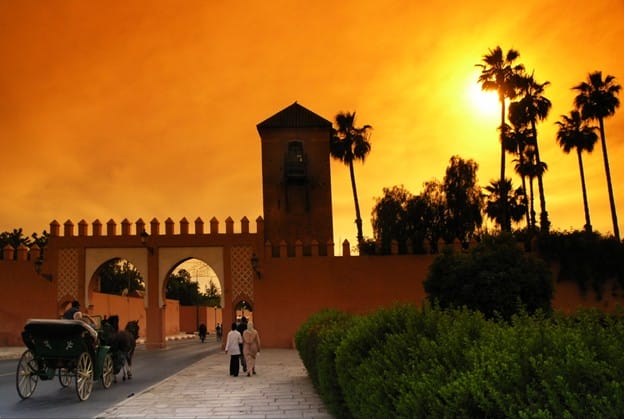
Marrakech is a city that exists in layers. To the casual observer, it is a whirlwind of sound — the persistent hum of motorbikes, the rhythmic clinking of mint tea glasses, and the call to prayer echoing across the Jemaa el-Fnaa. But for those who carry a camera, the true magic of the "Ochre City" isn't found in the noise. It is found in the silence of its shadows and the sudden, breathtaking symmetry of a hidden courtyard.
The Medina is a fortress of privacy. From the outside, the streets are often nothing more than windowless walls made of sun-baked mud and lime. This is intentional; Islamic architecture historically prioritises the "inner" world over the "outer" display. However, if you know where to look, or if a heavy cedar door happens to swing open at the right moment, you are treated to a visual feast of emerald tiles, citrus trees, and intricate carvings that feel like a well-kept secret.
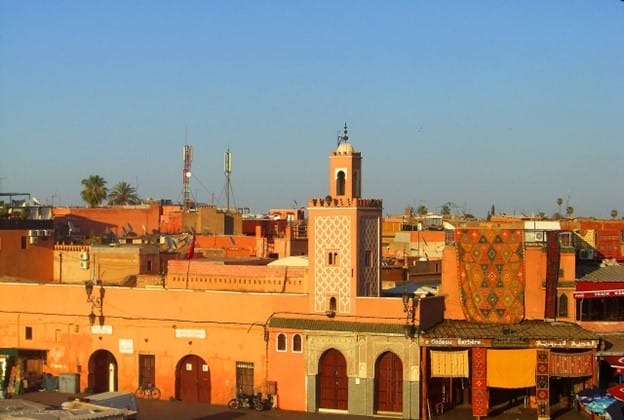
Marrakech
Navigating the labyrinthine alleys of the old city can be overwhelming for first-timers. The streets don't follow a grid; they curve, narrow into dead ends, and occasionally open up into bustling squares. While getting lost is part of the quintessential Marrakech experience, it can be helpful to have a local expert point out the historical nuances of the architecture that you might otherwise walk right past. For those who want to get their bearings and discover the history behind the city's famous gates, joining free walking tours in Marrakech is an excellent way to find those tucked-away corners that aren't always pinned on a digital map.
If you spend even an hour walking through the Mouassine or Kaat Benahid districts, you will realize that doors in Marrakech are more than just entry points. They are statements of craftsmanship and symbols of the family’s status.
The doors here are typically made of heavy cedar wood, often weathered by decades of North African sun into a soft, silvery grey or stained a deep, resonant brown. What makes them so photogenic are the details:
You might notice smaller doors "cut" into much larger ones. Historically, the large gates were for livestock or carriages, while the smaller door (the postern door) was for people. This forced anyone entering to bow their head slightly, a sign of respect to the household within. Capturing a local resident stepping through one of these small portals provides a wonderful sense of scale and "human" storytelling in your photography.
The word Riad actually comes from the Arabic word for garden (ryad). In Marrakech, the courtyard is the lungs of the house. Because the city can be punishingly hot, these central spaces are designed to be cool, shaded oases.
Located in the heart of the Medina, Le Jardin Secret is one of the most magnificent examples of palatial architecture. It was rebuilt in the 19th century and recently restored to its former glory. For a photographer, the "Islamic Garden" section is a dream. The water channels, which represent the four rivers of paradise, provide perfect leading lines that draw the eye toward the lush greenery and the traditional gazebos.
The contrast between the "Majorelle Blue" accents and the terracotta walls creates a colour palette that requires very little editing. The best time to visit is during the "Golden Hour" when the light hits the upper towers of the complex, casting a warm glow over the marble walkways.
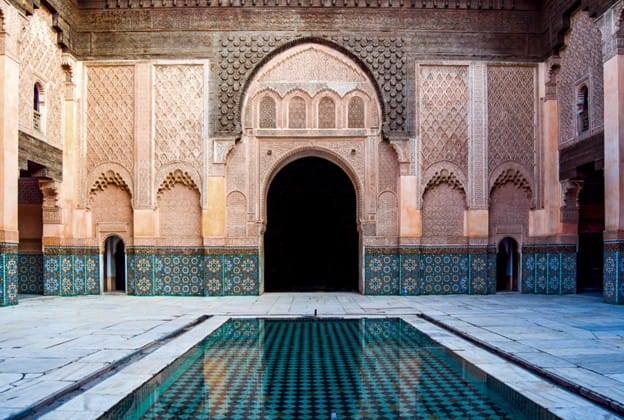
No photographic journey through Marrakech is complete without a visit to the Ben Youssef Madrasa. This 16th-century Islamic college is a masterclass in Zellige (terracotta tilework).
If you are planning a dedicated "photo walk," ensure these spots are on your itinerary:
Marrakech is a city that rewards the patient. It requires you to put down the map, slow your pace, and look for the subtle details — the way a vine of bougainvillea spills over a crumbling wall, or the intricate geometry of a brass door handle. When you stop looking for the "big" sights and start looking for the hidden thresholds, you’ll find the true soul of Morocco.

Sara Essop is a travel blogger and writer based in South Africa. She writes about family travel and experiences around the world on her blog "In Africa and Beyond". Although she has been to 53 countries thus far, she especially loves showcasing her beautiful country and is a certified South Africa Specialist.