
Graduate research is often imagined as a solitary process involving long hours in libraries, endless note-taking, and quiet typing behind a laptop. But for many students, the most important discoveries happen far from their home campus. Field research opens the door to primary sources, cultural insights, and real-world data that no archive alone can provide.
You may be deep into your program or just starting to outline your proposal. Wherever you are in the process, one thing is clear: meaningful research often demands leaving your comfort zone. While you can order a quality essay from an essay writing service like DoMyEssay to support coursework along the way, your thesis will benefit most when you pursue answers where they truly live: in the field, not just the footnotes.
Travel-based dissertation work offers access to sources and experiences that academic libraries cannot replicate. Whether you are studying endangered languages, ecological systems, historical documents, or social movements, direct observation adds a level of depth that enhances the credibility of your findings.
Interviewing participants, observing behaviors, and collecting original data helps you test assumptions and refine your questions. What you learn on-site often changes how you interpret your topic, and that process leads to stronger, more nuanced arguments.
Traveling for research teaches you how to manage your project without relying on constant feedback. Away from familiar routines, you make real-time decisions about how to collect data, navigate logistics, and respond to obstacles. Each adjustment you make builds your skills as an independent scholar.
Even when unexpected issues arise, like missed meetings, unclear translations, or limited access, you learn to stay focused. This self-direction prepares you for future academic work and for any professional environment where you must lead without constant guidance.
Coordinating research across borders builds skills that extend well beyond your degree. You practice managing timelines, working with diverse teams, and communicating across cultures. These are valuable assets in fields like policy, research, education, and consulting.
You also gain confidence in situations that require negotiation, adaptability, and diplomacy. Whether you are securing interviews, obtaining permissions, or presenting findings in a new environment, the experience sharpens your ability to work in complex, real-world settings.
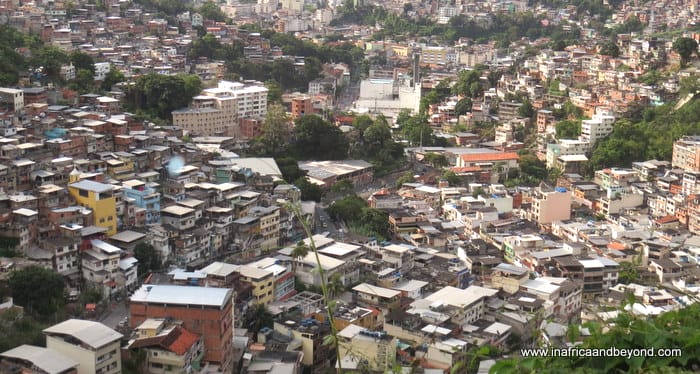
Favela in Rio De Janeiro
Academic travel changes how you approach learning and problem-solving. You gain perspective through discomfort, reflection, and challenge. When your research brings you into contact with unfamiliar ideas or practices, it forces you to examine your own thinking more carefully.
As you spend time in different environments, you learn to ask better questions and listen more closely. These habits shape the way you write, analyze, and contribute to your field. The growth you experience in the process often informs your work in ways that remain with you long after the degree is finished.
Graduate students who conduct fieldwork often describe it as the turning point in their academic path. One political science student traveled to rural India expecting to confirm a theory on civic participation. Instead, she found community dynamics that challenged her assumptions and led her to redesign her framework. A linguistics student researching oral traditions in South America uncovered a link between language preservation and mental health access, which opened an entirely new interdisciplinary chapter in his project.
These experiences not only shape the direction of the dissertation; they also strengthen the researcher’s sense of purpose and responsibility to the work.
If you are considering international fieldwork, early planning is essential. Look into research fellowships, institutional grants, or exchange programs that support travel. Connect with faculty members who have regional expertise and can help you prepare for the realities of working on the ground.
Build a timeline that includes time for logistical hurdles and space for unexpected changes. Being prepared to adapt will make your trip more productive and less stressful. A flexible plan grounded in strong preparation is often the most effective approach.
Fieldwork does not replace academic training. It strengthens it. When you return to your university, you will likely approach your writing, discussions, and presentations with new clarity. Your arguments will reflect lived experience, not just theory. Faculty members often notice that students who conduct field research write with greater insight and communicate with more precision.
You may also inspire others. By sharing your process, findings, and challenges, you contribute to a broader academic community that values evidence, context, and depth.
Strong graduate research is built on curiosity, commitment, and real engagement with the subject. Field-based dissertation work provides access, context, and perspective that no classroom alone can offer. It trains you to work independently, think flexibly, and grow both personally and professionally.
If your research could benefit from first-hand exploration, consider the thesis trip not as an extra step, but as a central part of your journey. The skills and insight you gain through travel will serve your dissertation and your future far more than staying within familiar walls.

Sara Essop is a travel blogger and writer based in South Africa. She writes about family travel and experiences around the world. Although she has been to 53 countries thus far, she especially loves showcasing her beautiful country and is a certified South Africa Specialist.