
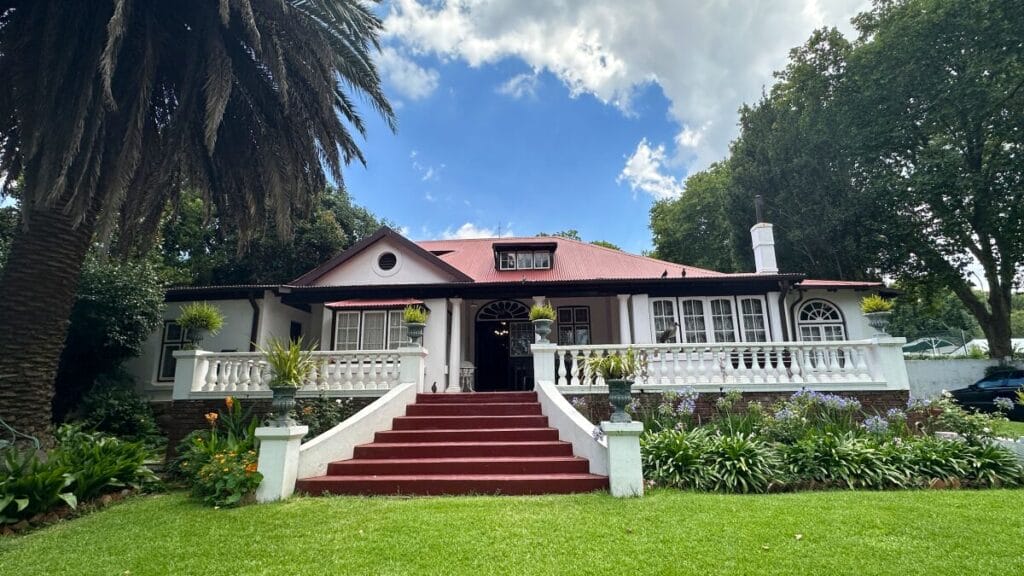
I first heard about Lindfield House in 2017, when in a temporary bout of boredom, I went onto Tripadvisor and searched for “Things to Do Near Me”. I was surprised to find a Victorian house listed as one of the top attractions in Johannesburg, within 10 km from my house. I mentally filed it in my list of things to do, yet it was months before I finally got there. Then too, it was an impulsive decision, and I emailed Katharine Love the night before to ask if she would be having a tour the following day. She replied early the next morning, in the affirmative.
However, one is advised to book at least a day in advance, especially if you require tea.
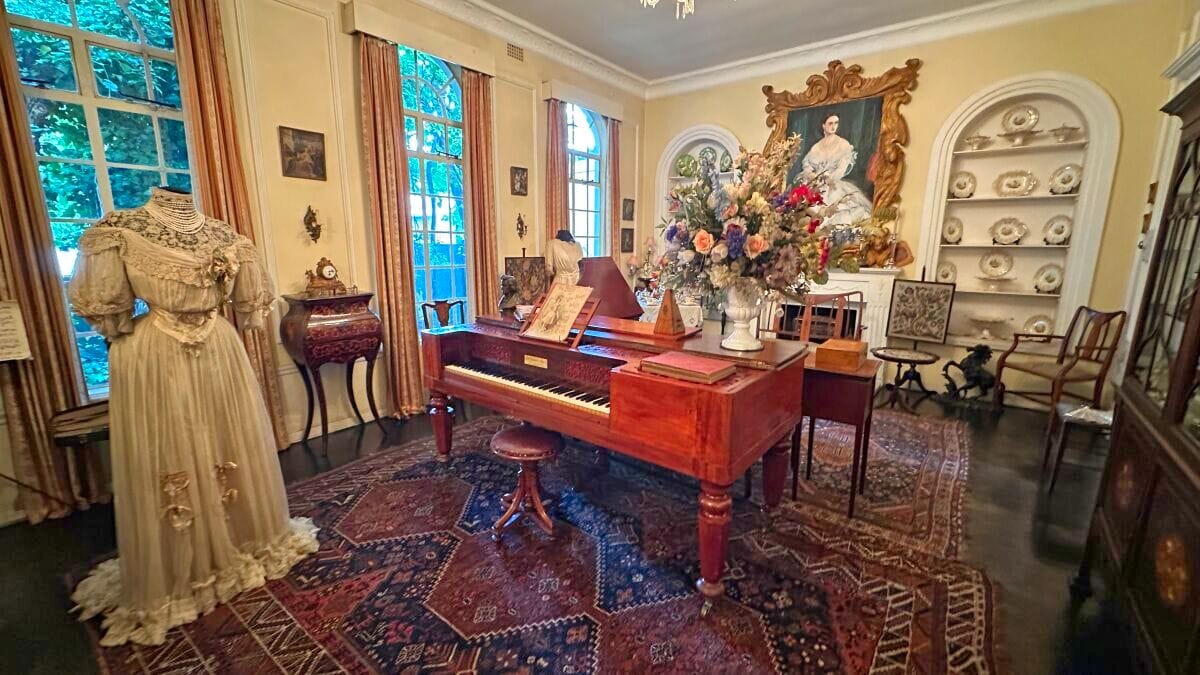
Lindfield House
Lindfield House is a Provincial Heritage Site. The original small cottage (built in 1910) was inspired by Herbert Baker who dominated the architectural scene in South Africa between 1892 and 1912. Katharine's grandmother originally bought the house and Katharine and her mother moved in during 1967.
Over many decades, the house was meticulously preserved and furnished with original and period-appropriate Victorian and early 20th-century furniture, décor, art, toys and household items. Following her mother’s passing in 1996, Katharine opened the home as a Victorian museum, showcasing this extensive collection from the Victorian and Edwardian eras.
Instead of being just a display, the house offers a “living museum” experience — visitors get guided tours through rooms like the drawing room, library, dining room, nursery, kitchen and more, much as they would have looked back then. Katharine still lives in the 22-roomed house alone.
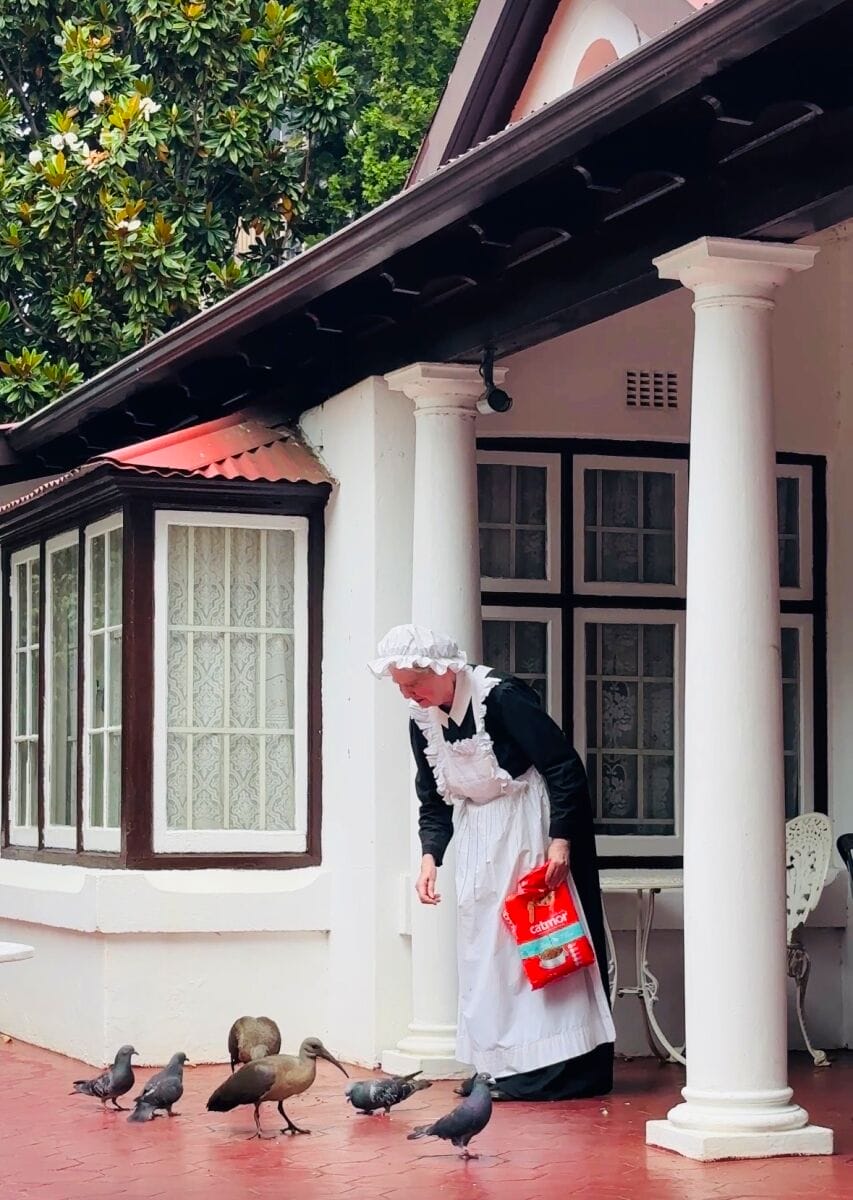
Katharine feeding the birds
Katharine greeted us at the gate in a Victorian parlour maid’s outfit and we began the tour with the rest of the group. Groups are deliberately kept small as there isn’t much space for large groups in the house.
I visited the house again in 2026 and not much had changed.
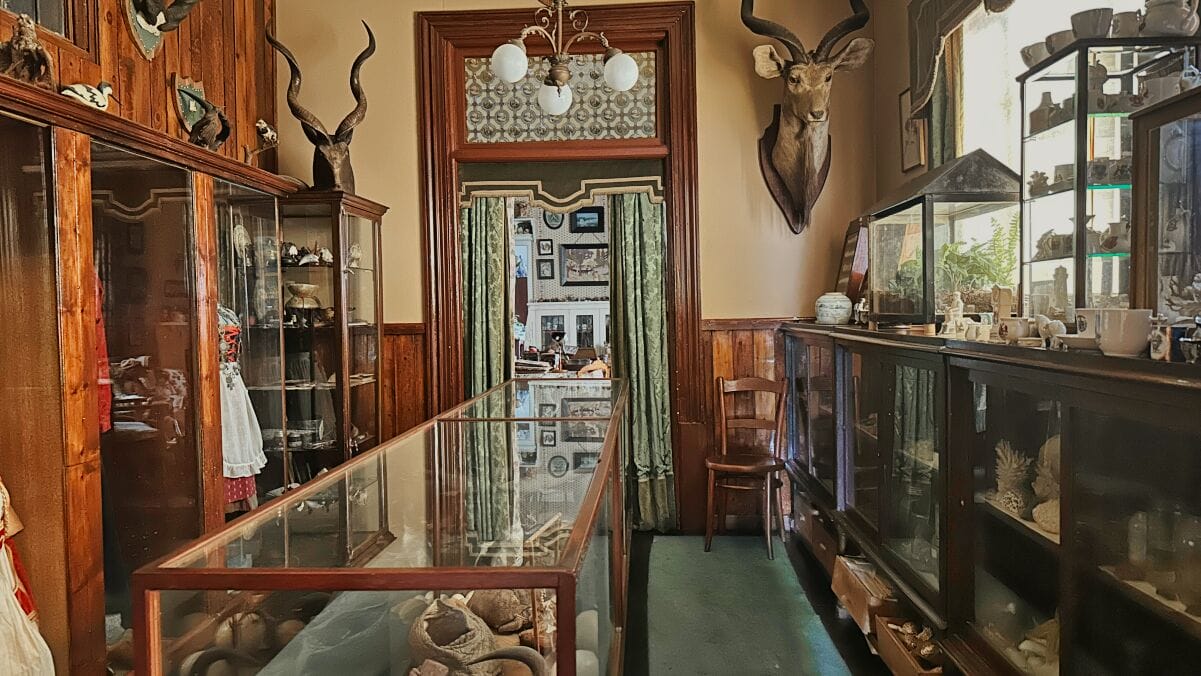
The museum room
Walking into the house was like entering a bygone era. Most of the rooms were laid out as they would have been in Victorian times, although some are designed in Edwardian-style. Each room was filled with a treasure trove of Victoriana. Each item had its own story and Katharine shared many of these stories and anecdotes with us. They were so far removed from the lives we now live that we were utterly fascinated. The soft-spoken Katharine herself, was like a walking encyclopaedia and answered our many questions precisely and in detail. I was accompanied by my teenage daughter – who doesn’t normally enjoy museums – but even she was captivated here.
1. Houses were kept cluttered and dark. Clutter represented class. The home was often “over-dressed” with plush fabrics and heavy curtains to provide a cocoon from the world outside. Curtains were kept drawn as sunlight would damage the delicate, expensive interiors.
2. There were special times for visiting people. This was printed on their calling cards. Unmarried women were included on their mothers’ cards.
3. Visitors were not expected to stay for a longer period than it took to drink a shallow cup of tea.
4. The drawing room was originally called a withdrawing room. It was a room to which the owners of the house could "withdraw" for more privacy. Guests were received here too.
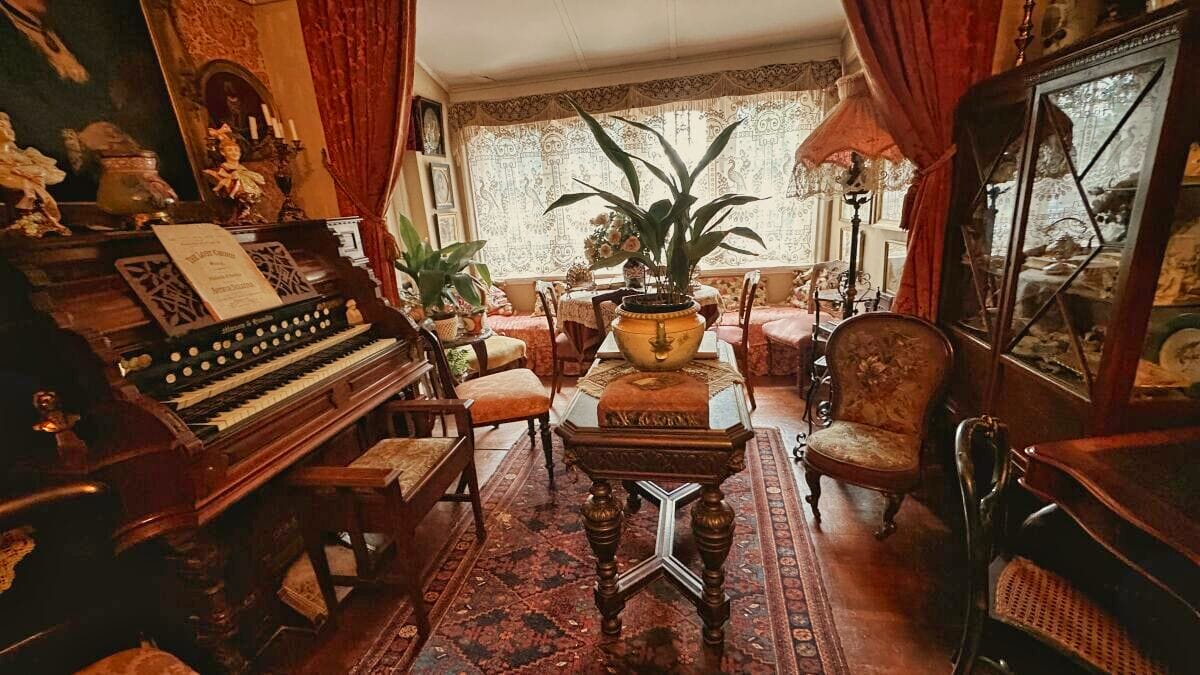
The Drawing Room
5. Victorians were very formal people. They wouldn’t dream of going to dinner without dressing up first. Children were not allowed in the main dining room and had their own dining room.
6. Children didn't spend much time with their parents, and were only allowed in the drawing room for an hour or two each day, accompanied by their nannies. They were expected to shake hands with their fathers and call them "Sir". If they misbehaved, they were taken back to the children’s quarters.
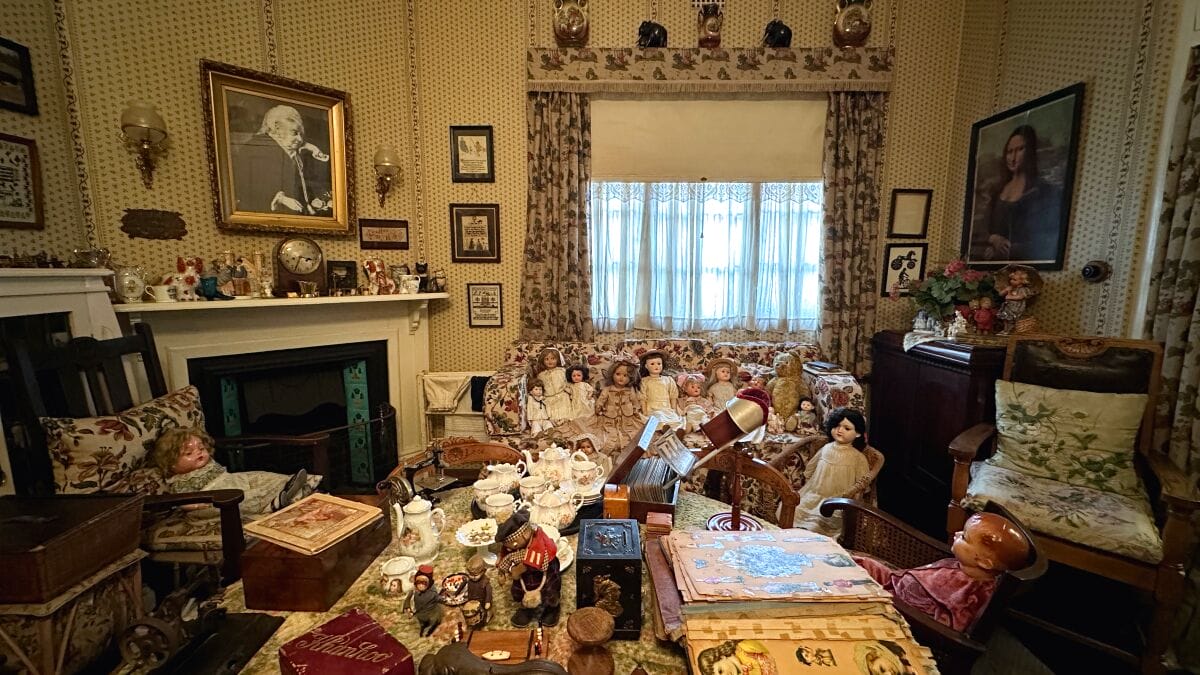
The children's quarters
7. The library was primarily a man’s domain. Women were only allowed in there with permission from the men. If a book wasn’t meant for a woman’s eyes, it would be placed high above her reach. Women had to be educated only to the level that they were entertaining companions to their husbands. (Yes, seriously!) My daughter, a certified bookworm, was shocked to hear this.
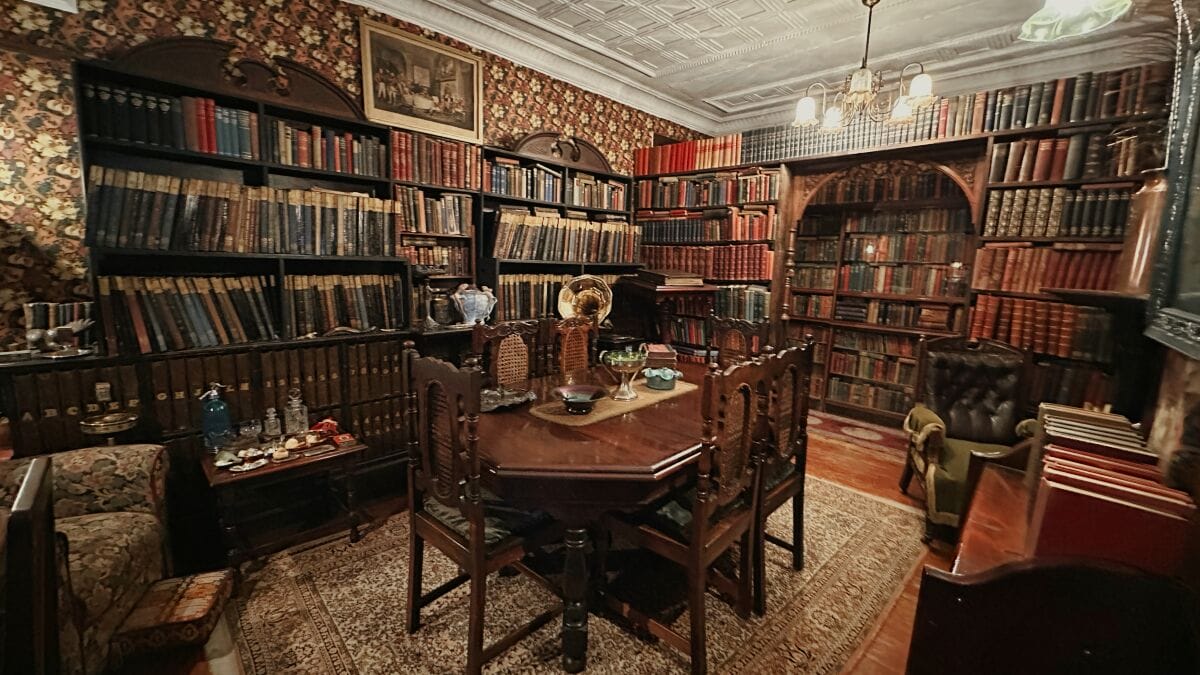
The library
8. “Mrs Beeton's Book of Household Management” was an extensive guide to running a household in Victorian Britain. Mrs Beeton was considered the Martha Stewart of Victorian times.
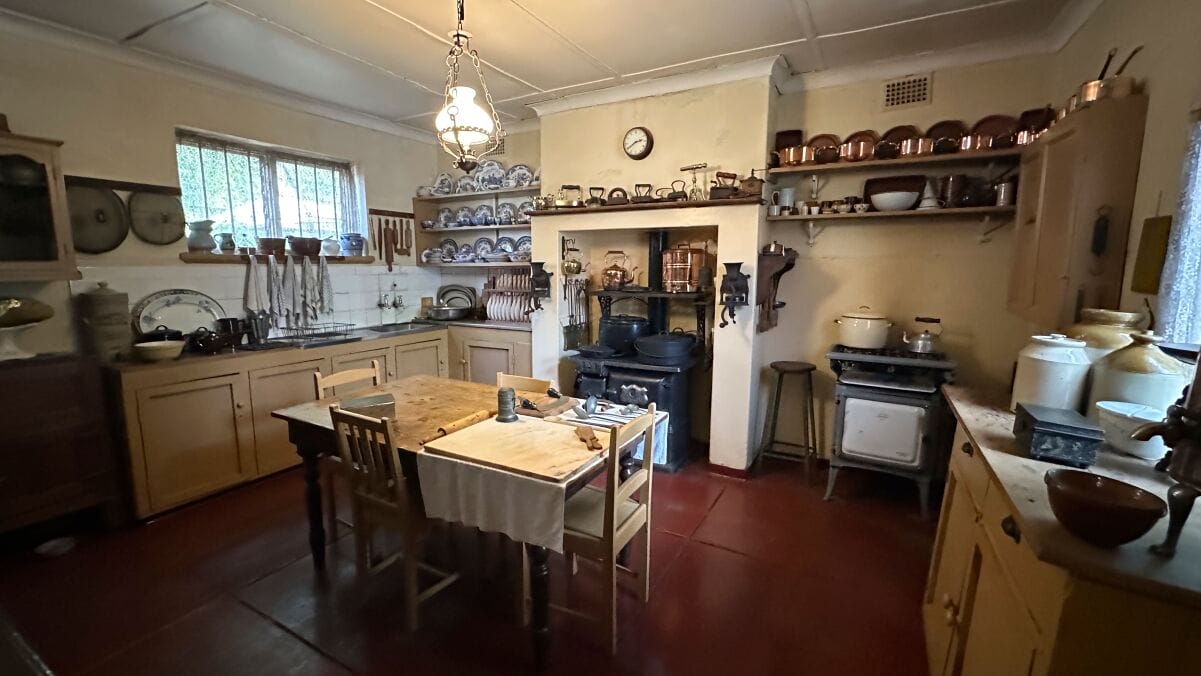
The kitchen
9. The lady of the house was not allowed in the kitchen. Only servants went there. Households with a lot of silver had a footman to protect the silver at night - with a gun.
10. Tea was more prized than coffee, and if both were served, then the lady of the house would serve the tea, while the servants would serve the coffee.
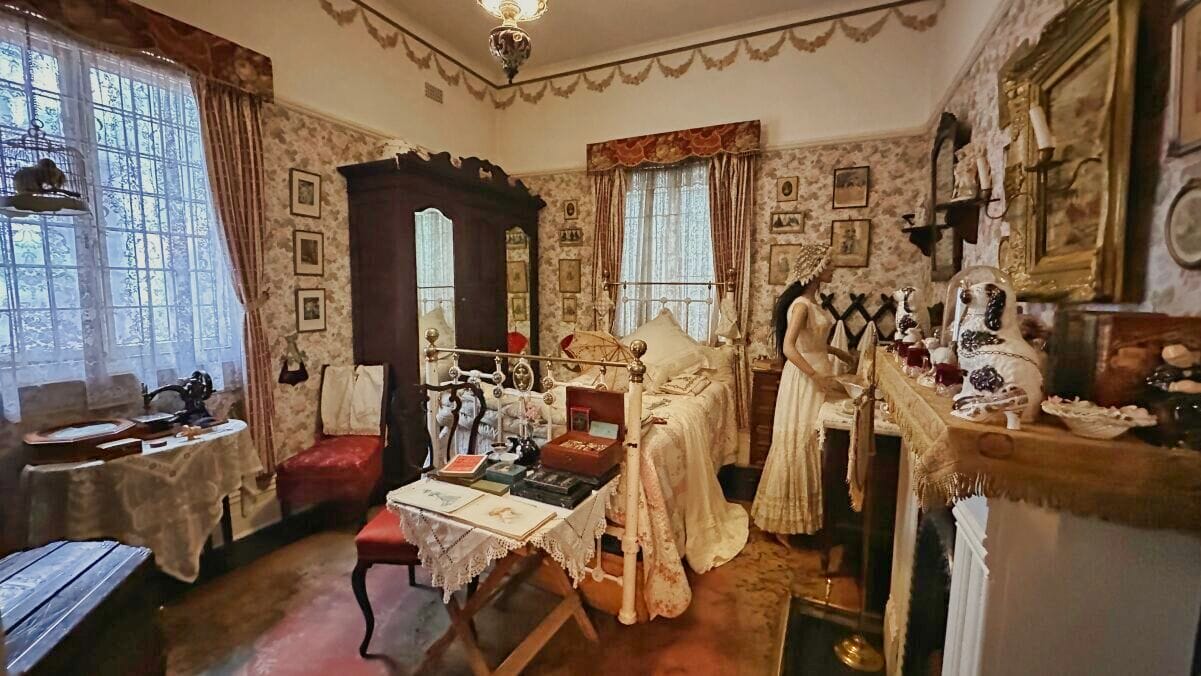
Teenage girl's room
11. Victorian women wore extravagant clothes with a cage construction made of hoops which would fill out their dresses. Many women were injured when they sat down a tad too abruptly and the hoops would spring up and bang their faces.
12. Husbands had a smaller, separate bedroom alongside the main bedroom, with a door leading outside. They would sleep there if they snored, or went out and returned late. Wives were not allowed to question the latter though.
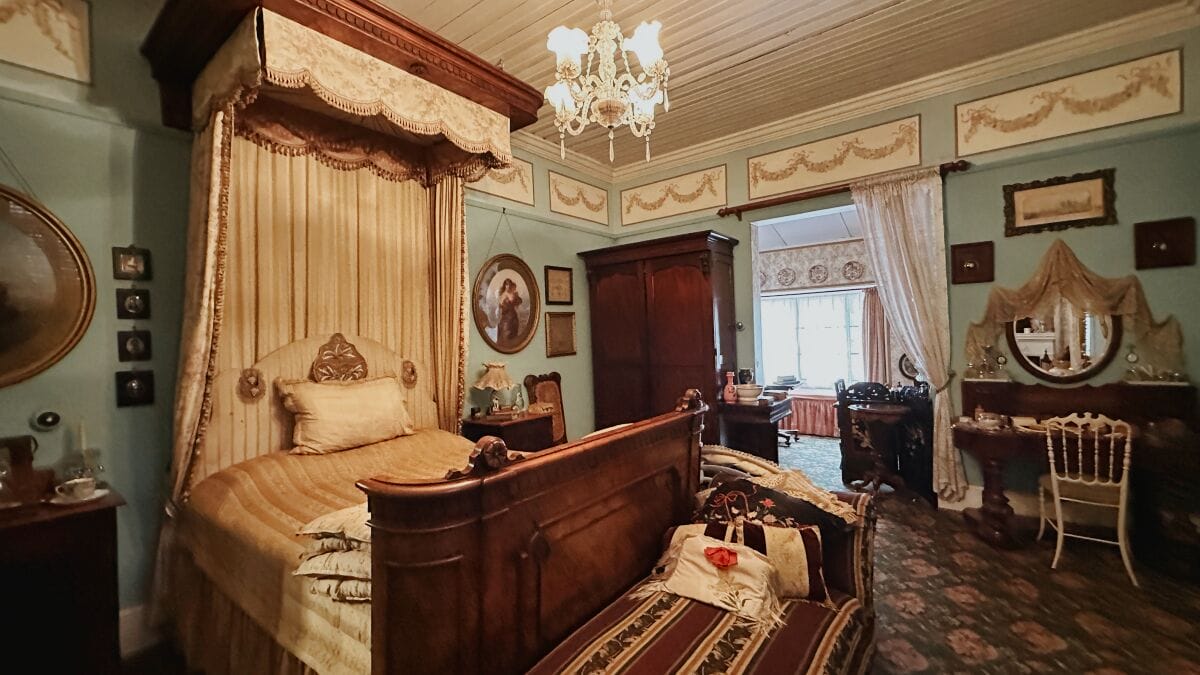
The main bedroom - where Katharine still sleeps
13. Dinners were not meant to last more than 1 hour 20 minutes. The Victorians had thoughtful gadgets for a wide variety of uses, which is evident in the dining room.
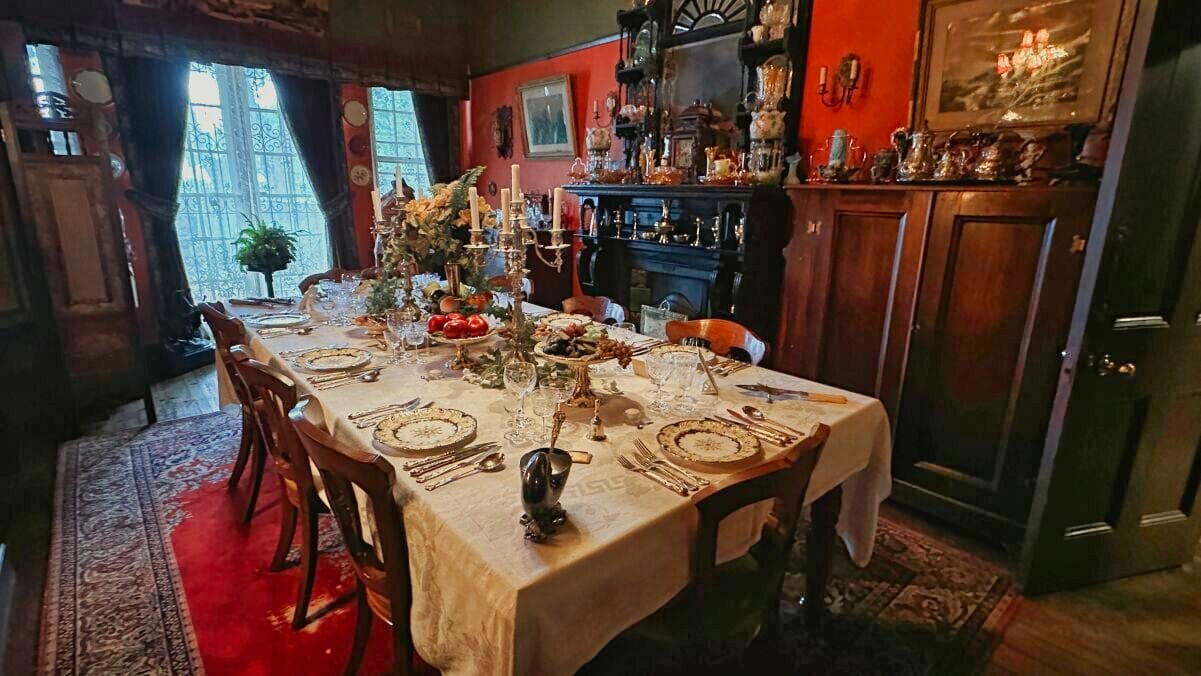
The dining room
See more Victorian trivia here.
Lindfield House is a national treasure, and it is run on a shoestring budget. Do yourself a favour and visit it, as you are not likely to see such a comprehensive and well-maintained depiction of Victorian life anywhere else in South Africa.
Don’t miss the amazing doll’s house which Katharine and her late mother spent years decorating and furnishing, making many of the beautiful pieces themselves.
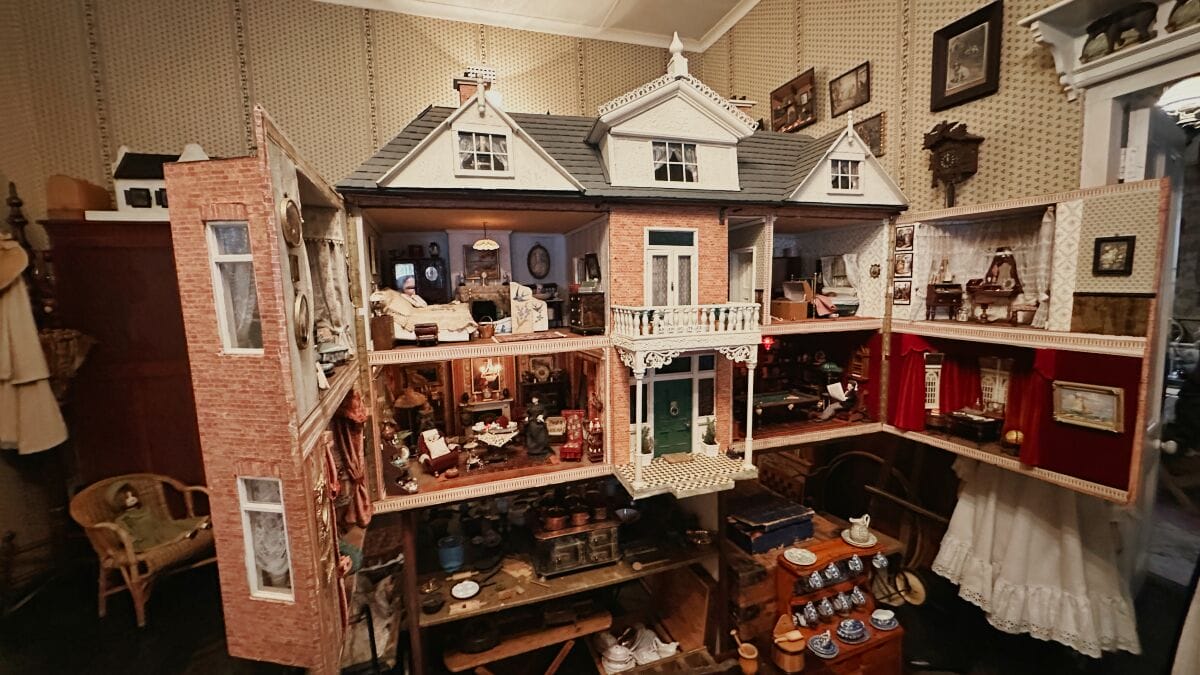
The doll house
For more information and entrance fees, go to Lindfield House . The house is situated in Richmond Avenue, Auckland Park.
P.S. Only well-behaved children are allowed as there are many breakable antiques in the house.

Sara Essop is a travel blogger and writer based in South Africa. She writes about family travel and experiences around the world on her blog "In Africa and Beyond". Although she has been to 53 countries thus far, she especially loves showcasing her beautiful country and is a certified South Africa Specialist.


What a totally amazing website. You've got something special going on here!
Magnificent website. A lot of useful information here. I am sending it to a few friends.
There are so many fun and interesting things to do in and around Johannesburg for example, golfing, eating out and visiting heritage sites like the Melville Koppies or museums.
Johannesburg is culturally beautiful. Another great advantage of partaking in all these adventurous activities is that there is a host of guest houses and bed & breakfasts available to rest.
Way cool! Some extremely valid points! I appreciate you penning this
post and also the rest of the website is really
good.
Pretty! This has been an incredibly wonderful article. Thanks for providing this info.
I always spent my half an hour to read this weblog's articles or reviews all the time along with a mug of coffee.
Oh I love how these types of places are perfect for stoking our imaginations and letting us step back in time. What a wonderful experience seeing Katherine and experiencing life as it was back then -- I can definitely see why they require a week in advance booking!!
I really enjoyed this post, Sara! It sounds like a fascinating place, and what a unique experience to get a tour from a family member. It was interesting to learn that proper Victorian homes were cluttered and dark - one of my favorite museums is the Isabella Stewart Gardner Museum here in Boston, which features the private collection of a wealthy Victorian woman. It is extremely cluttered and dark!
Looks like a cool place to visit! I'm traveling in South Africa right now and I will be in Johannesburg in a few weeks!
What a fascinating place, Sara. I lived in Johannesburg for years and didn't know about it. Thanks for sharing all your lovely photos.
Never knew about this! Next on our list as well!